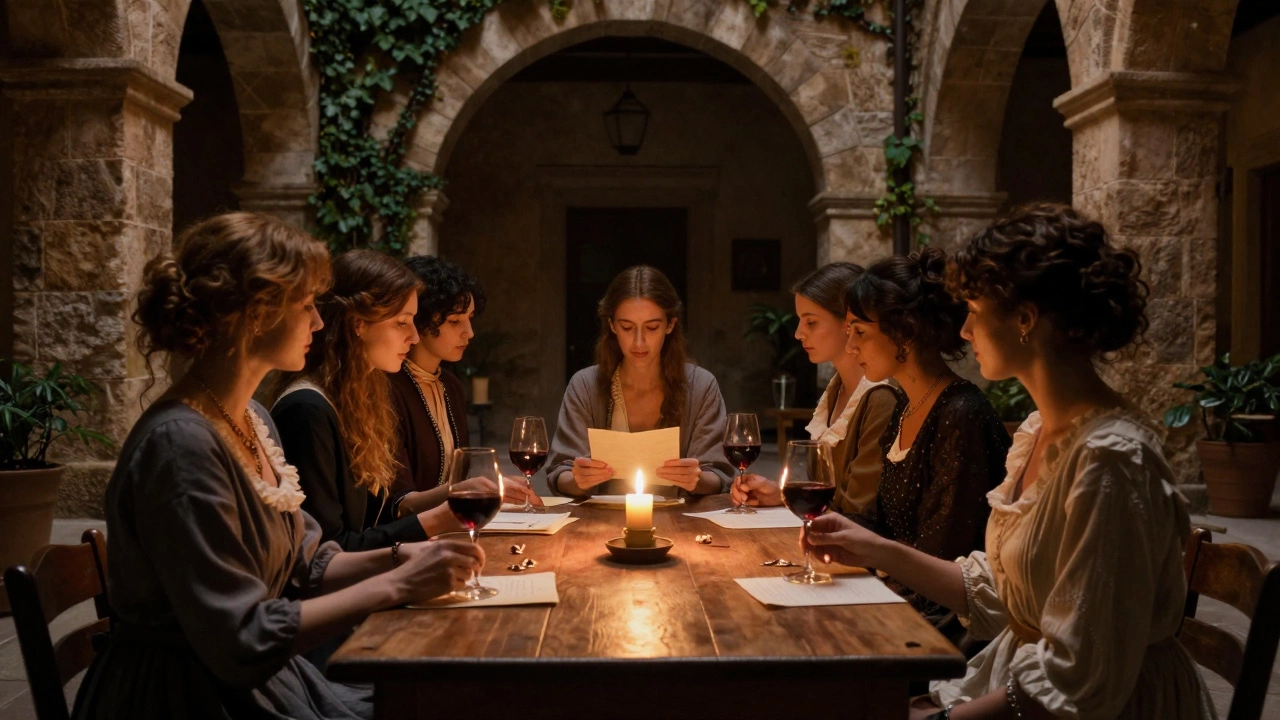
Back in the 17th century, Toulouse wasn’t just a city of stone cathedrals and vineyards-it was a place where power moved in whispers, and the women who moved with it held more influence than most men realized. These were the special girls of the Court Merchant Toulouse, not nobles by birth, but by wit, charm, and the quiet art of connection. They weren’t courtiers in the official sense, yet they shaped alliances, smoothed tensions between merchants and nobility, and kept the wheels of commerce turning when official channels failed.
Some of them were known in Parisian circles too-though not always by name. You might hear stories about scorts in paris, women who navigated the glittering, dangerous world of French high society with grace. But in Toulouse, the rules were different. There was no royal court to serve, no Versailles to impress. Instead, these women built networks in the shadow of the Capitole, trading favors over wine, letters, and late-night dinners in private courtyards. Their currency wasn’t gold-it was trust.
One of them, Marie-Louise de Vauclerc, kept ledgers not of accounts, but of connections. She remembered which banker owed a favor to which magistrate, which merchant’s daughter was engaged to a nobleman’s cousin, and which diplomat had a weakness for lavender soap. When the city council needed a loan to rebuild the bridge after the flood of 1672, it was Marie-Louise who arranged the meeting-not with the mayor, but with the widow of a retired arms dealer who still held sway over three of the city’s largest financiers. She didn’t ask for money. She asked for a letter of introduction. That’s how power worked here.
How They Got Started
Most of these women weren’t born into privilege. Many came from artisan families-tailors, bookbinders, apothecaries. Some were daughters of minor nobility who lost their fortunes in war. Others were widows left with nothing but their wits. What they shared was an understanding of human nature. They knew how to listen better than anyone else in the room. They noticed the way a man’s hand trembled when he talked about taxes, or how a merchant’s wife avoided eye contact when she mentioned her husband’s debts.
They didn’t advertise. No signs hung outside their doors. No pamphlets were printed. Their reputation spread through word of mouth-quiet, careful, and always in confidence. A banker would mention a woman who could get him an audience with the provincial governor. A merchant’s wife would whisper the name of someone who could arrange a private meeting with the Spanish envoy. These were not courtesans in the traditional sense. They didn’t sleep with clients for payment. They exchanged access-for access.
The Rules They Lived By
There were unwritten laws, passed down from one generation to the next. Rule one: never name names. If you told someone who paid you to arrange a meeting, you were dead in the water. Rule two: never accept direct payment for influence. Instead, you received gifts-fine linen, rare spices, a painting, a book of poetry. These were tokens of gratitude, not bribes. Rule three: never marry. Marriage meant loyalty to a husband, and loyalty to a husband meant losing your independence. Most of these women lived alone, often with a single servant or a niece who was being trained in the same craft.
They were careful about who they helped. A man who cheated his workers? No meeting arranged. A woman who spread rumors about her rivals? No letter written. Their power came from being seen as fair, not from being feared. And that’s what made them dangerous.

Their Legacy
By the time the French Revolution rolled around, most of these women were gone. Some had died quietly. Others had moved to Paris or Lyon, blending into the new world of salons and newspapers. But their influence didn’t vanish. The networks they built became the backbone of early French capitalism. The way deals were made, the way information flowed, the way trust was traded-it all started in places like Toulouse, in rooms lit by candlelight, with women who never signed a contract but changed the course of commerce.
Today, you’ll find their names in obscure archives, mentioned in letters between merchants and diplomats. No statues honor them. No museums display their portraits. But if you read between the lines of old ledgers, you’ll see their fingerprints everywhere.
Why This Matters Now
It’s easy to think of power as something loud-military might, political office, corporate titles. But history shows us that real influence often moves in silence. The special girls of Toulouse remind us that access is currency, relationships are assets, and the quietest voices often shape the loudest outcomes.
Think about it: who are the modern-day equivalents? The consultants who know the right person at the ministry. The event planners who get CEOs into private meetings. The social media managers who shape narratives without ever speaking on camera. They’re not in the headlines, but they’re the ones making things happen.
And if you ever find yourself in Paris, wondering about the hidden networks of influence, you might hear whispers of escort gir' paris-women who still navigate the spaces between power and pleasure. But in Toulouse, the story was never about pleasure. It was about precision.

The Hidden Economy of Trust
These women didn’t sell sex. They sold certainty. In a world where contracts were easily broken and letters could be intercepted, having someone you could rely on was worth more than gold. They created a parallel economy-one based on memory, discretion, and loyalty.
They kept journals. Not of finances, but of faces and favors. Who owed whom? Who needed what? Who could be trusted? One surviving notebook from 1681, found in a dusty attic in the Saint-Étienne district, lists over 200 names, each with a single word beside it: reliable, unstable, dangerous, useful. No dates. No amounts. Just truth.
That notebook was passed to a niece, who later became a confidante to a provincial governor. She never mentioned it in public. But when the governor needed to move a shipment of wool past a corrupt customs officer, he called her. And she made it happen-with a single note and a bottle of Burgundy.
Modern Echoes
Look around today. The women who broker deals between tech startups and government agencies. The lobbyists who know which senator’s assistant loves ballet tickets. The corporate facilitators who get you into boardrooms without a formal invitation. They’re the spiritual heirs of the Court Merchant girls.
The tools have changed. Emails replaced handwritten letters. Zoom replaced candlelit dinners. But the mechanics? The same. It’s still about knowing who knows whom. It’s still about being the one person who can make the impossible connection.
And if you’re ever in a room where the real decisions are being made, and no one’s talking about the numbers, look around. The person who’s quietest? The one who’s listening? That’s probably the one holding the keys.
That’s why, even now, you might hear about escort occasionnelle paris-not as a service, but as a symbol. A reminder that influence doesn’t always wear a suit. Sometimes, it wears silk, sips tea, and remembers every name you’ve ever whispered in confidence.